

The rise of intelligent machines is no longer about automation alone. It is about collaboration. Robots are stepping out of the background and into the forefront of science, becoming partners in discovery and pushing human knowledge into realms once thought unreachable.
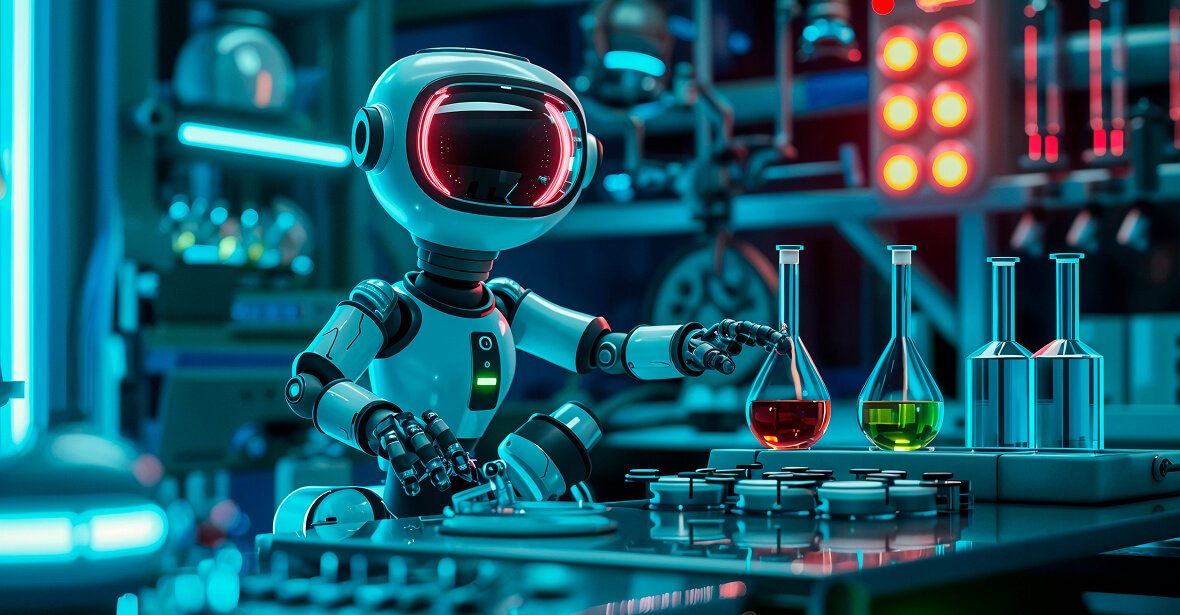
In the glowing light of a futuristic laboratory, a humanoid robot leans over a set of glass beakers, carefully mixing vibrant liquids of red, green, and gold. Its precise hands adjust dials and measure volumes with flawless accuracy. At first glance, this may look like a work of science fiction—but in reality, it symbolizes a profound shift already happening in the world of research and innovation.
From Assistants to Researchers
For decades, machines in laboratories have been designed to automate repetitive tasks. They pipetted liquids, managed storage systems, or ran standard tests. Their purpose was to save scientists time and reduce error in routine processes.
But artificial intelligence has redefined these machines. They now interpret data, recognize patterns, and even recommend the next steps in an experiment. Instead of being passive assistants, they are transforming into active researchers, capable of not only executing orders but also making informed decisions.
A robot working in a chemistry lab can analyze the results of hundreds of tests within minutes, adjust variables in real-time, and design new experiments without human intervention. It is a shift from simple automation to genuine innovation.
Precision Beyond Human Limits
Human researchers bring creativity and intuition, but they are also limited by time, energy, and the inevitability of error. Fatigue, distraction, or bias can skew results. Robots, on the other hand, operate with a precision and consistency that doesn’t falter.
Imagine testing thousands of chemical combinations overnight while maintaining flawless accuracy. What would take a human team weeks—or even months—can now be completed in hours. This acceleration is not just about speed; it’s about reliability. Experiments are reproducible, measurable, and immune to the errors of exhaustion.
A Catalyst for Breakthroughs
The implications of robotic research extend far beyond laboratories. In medicine, robots can test countless drug interactions to develop cures faster. In energy, they can optimize new fuels and batteries at a pace that keeps up with global demand. In environmental science, robotic researchers can identify sustainable solutions that would otherwise take decades to discover.
The image of a robot scientist in a neon-lit laboratory is both symbolic and prophetic. It represents a future where technology does not simply support science but actively shapes it. A future where human curiosity and machine intelligence intertwine to solve the mysteries of our world faster than ever before.

The sight of a robot carefully mixing chemicals is more than an image—it’s a mirror of what is coming. The laboratories of tomorrow will hum with the quiet precision of robotic researchers, tirelessly experimenting, analyzing, and learning.
And standing beside them will be human scientists, bringing vision, purpose, and heart to the pursuit of knowledge. Together, they will form a partnership that has the power to change not just the future of science, but the future of humanity itself.




2 Comments
The sight of a robot carefully mixing chemicals is more than an image—it’s a mirror of what is coming. The laboratories of tomorrow will hum with the quiet precision of robotic researchers, tirelessly experimenting
The laboratories of tomorrow will hum with the quiet precision of robotic researchers, tirelessly experimenting